

Before Maduro's capture, a revealing paper trail of sanctions
In the weeks before executing a military operation in Caracas to arrest Maduro and his wife, the Trump administration was laying out the ideological case against Venezuela through economic sanctions.

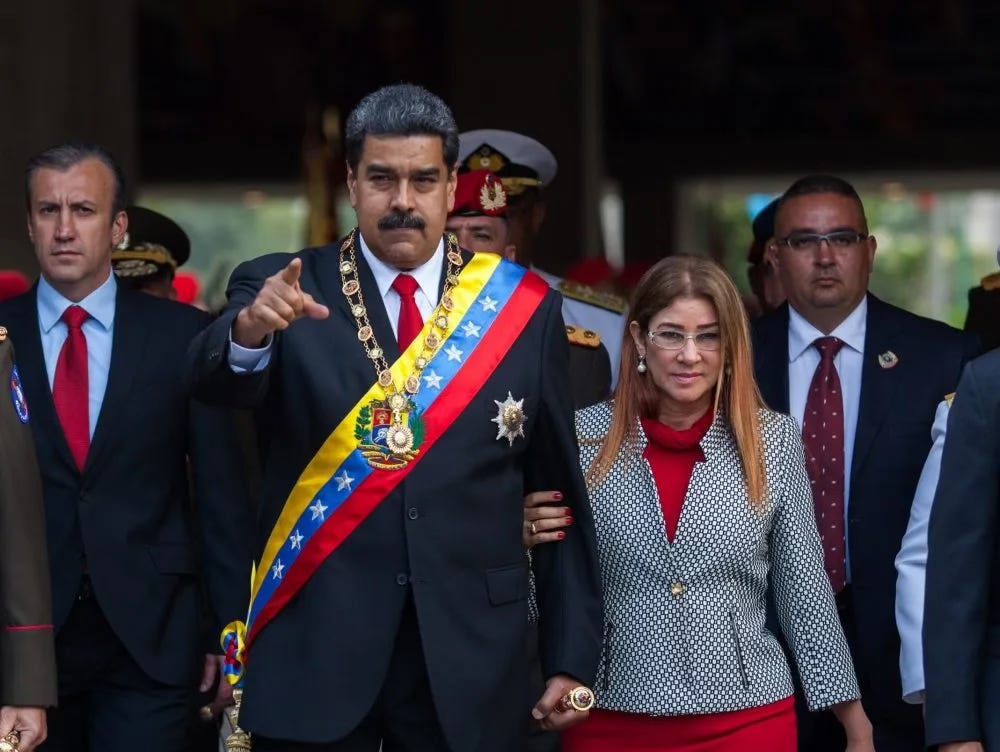
A Saturday for the books. The U.S., in a joint operation between military and federal law enforcement elements, entered Venezuela, capturing its authoritarian leader, Nicolás Maduro, and his wife, Cilia Flores. The two are now aboard the USS Iwo Jima, headed for New York City to answer a federal indictment accusing them of narco-terrorism.
Meanwhile, in Venezuela, the U.S. is beginning to carry out President Trump’s desire to “run the country” until a transition in power can be made.
Though the news broke rather suddenly and unexpectedly, the U.S. Department of the Treasury left a paper trail of Venezuela-related sanctions in the weeks leading up to Maduro’s capture, highlighting the Trump administration’s desire to connect Venezuelan oil to narco trafficking and the ruling government in Caracas.
The U.S. turned up the heat sanctions-wise in November, when the federal government designated the drug-smuggling Cartel de los Soles as a Foreign Terrorist Organization (FTO) run by Maduro and other high-ranking officials from within the Venezuelan government.
This essentially put Maduro in the same league as al-Qaeda or the Islamic State, perhaps an attempt by the Trump administration to build the case to the American public that military intervention against the Caribbean nation may well be warranted. Trump, in his address on Saturday, called out the Cartel de los Soles by name.
After this terrorism designation, the Treasury Department on December 3 slapped new sanctions on those involved with money laundering for the fearsome Venezuelan-based drug cartel Tren de Aragua. In his announcement that several new affiliates with the group would be barred from accessing the U.S. financial system, Treasury Secretary Scott Bessent said that “barbaric terrorist cartels can no longer operate with impunity across our borders.”
Then, just over a week later, the Trump administration tied together the three T’s—terrorism, trafficking, and (oil) tankers. On December 11, the Office of Foreign Assets Control issued sanctions against the family members of Maduro’s wife, Cilia Flores. They were accused of helping to prop up Venezuela’s sanctioned oil industry as well as Maduro’s “narco-terrorist regime.”
This move coincided with efforts by the U.S. to intercept Venezuelan oil tankers believed to be transporting banned petroleum to global ports.
Sanctions, beyond their mechanical purpose of freezing finances, also serve a deeply symbolic role. They give governments the ability to name their enemy and explain their enemy’s wrongdoing prior to putting boots on the ground.
Given this, it is no surprise that following the sanctions against Venezuelan First Lady Cilia Flores’ family, the Treasury Department sanctioned more Maduro family members before turning its attention to Venezuela’s military capabilities and close ties to America’s greatest state adversary in the Middle East, Iran.
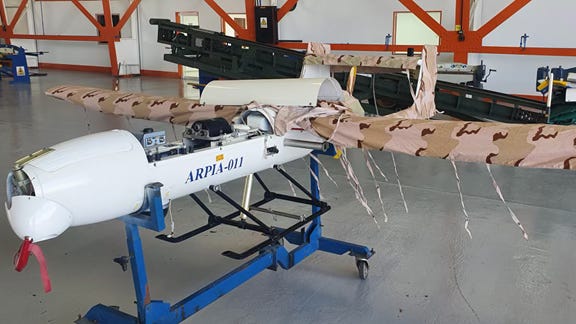
Just before the new year, the Trump administration announced it would be financially isolating—through sanctions— the company Empresa Aeronáutica Nacional. The firm is known for making extensive purchases of military drones from Iran.
The Treasury Department shared the photo below of a partially assembled Iranian surveillance drone—the Mohajer-2 UAV—at the Libertador Air Base in Maracay, Venezuela.
Finally, before the attack and capture of Maduro came a fresh round of sanctions on those tied to Venezuela’s state-run oil company, whom Trump is now likely seeking to dismantle.
THE BIG QUESTION
If the plan was always to topple Maduro and his government by force, using as justification a federal criminal indictment, why engage in such aggressive sanctions beforehand?
After all, in the trifecta of criminal justice, military force, and economic sanctions, the latter is probably viewed as the least effective tool at changing behavior.
The most obvious answer may be that sanctions simply set the stage to justify military action. The Trump administration is building a case, presenting Venezuela as an unstable narco-state fueled by illicit oil and military connections to America’s enemies.
Another reason for the sanctions campaign may be deception. Seeing the already stiff financial walls the U.S. has built around Venezuela grow higher may have placated Caracas into thinking their fate would be like Cuba’s—a stiff embargo but no boots meaningfully on the ground.
Sanctions are the tool you use when you don’t want to spill blood and make things messy. Though they can result in real economic damage, they are a milder middle ground.
This argument, though, could be undermined by the very public saber-rattling from the Trump administration in the later months of 2025. The world knew American warships were in the Caribbean and that war or land strikes could come at any time.
Maybe, in the end, the recent sanctions campaign was meant to serve its most basic purpose: to drain Maduro, his wife, and their associates of any financial resources before going in for the symbolic kill.