

BREAKING: U.S. drops sanctions against embattled former Bosnian Serb leader
The move is a remarkable pivot by Washington, which has long sought to isolate Serbian nationalists in the Balkans.

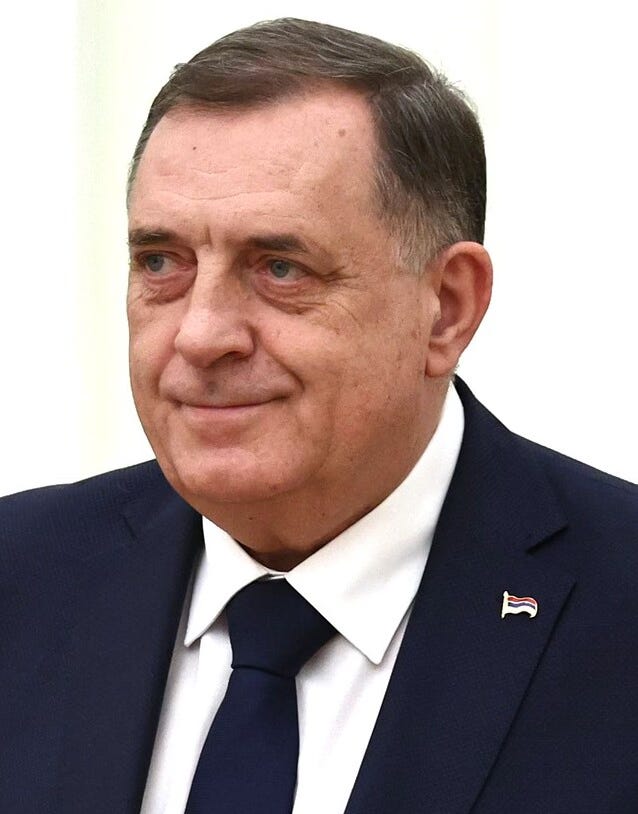
The U.S. government removed sanctions against prominent Bosnian Serb separatist Milorad Dodik on Wednesday.
The move comes days after Dodik stepped down as leader of Bosnia and Herzegovina’s Serbian entity known as Republika Srpska.
The Department of the Treasury’s Office of Foreign Assets Control (OFAC) also removed sanctions on Dodik’s family members and a closely linked media company, Alternativa TV. Sanctions against other members of Dodik’s inner circle came down last week.
Wednesday’s move was an extraordinary pivot in foreign policy by the United States government, which had long economically isolated prominent Serbian nationalists within Bosnia for their separatist rhetoric and actions over fears it could undermine the 1995 Dayton Accords.
That agreement ended a war that saw extensive ethnic violence between Bosnian Serbs, Bosnian Muslims (Bosniaks), and Croats. This included the Srebrenica massacre, where the Bosnian Serb army committed genocide against Bosniaks in a small town in eastern Bosnia.
In the aftermath of the war, the new nation of Bosnia and Herzegovina established a split system of government, with Serbs controlling part of the country and Bosniaks and Croats co-governing the rest.
A foreign envoy for implementing the Dayton Accords also presides over the nation’s government.
Dodik rose to lead Republika Srpska in 2022, building a Serbian nationalist movement whose supporters vowed to separate from Bosnia and join nearby Serbia and who rejected the foreign leader atop the Bosnian government.
For this, a court in Sarajevo sentenced Dodik to one year in prison this summer for undermining the terms of the Dayton Accords. The sentence was later commuted but a six-year political ban was imposed as well.
Dodik refused to step down for many months, undertaking a state visit to Russia, where he received a warm reception from Putin’s foreign minister, Sergei Lavrov. Dodik finally vacated his office in mid-October. However, his appeal to the court in Sarajevo is still in progress, scheduled for a special session on Nov. 6.
During his ouster, Dodik built strong ties with allies of the Trump administration, including Rod Blagojevich, the Serbian-American former governor of Illinois whose political corruption conviction was pardoned by President Trump.
Dodik also kept up a lobbying campaign to get his sanctions removed, with Srpska entities listed recently on the U.S. government’s database of foreign lobbying.
Now Dodik is no longer economically isolated by the United States, effectively ending the pressure campaign by the U.S. against Serbian nationalists in the Balkans.
This is a breaking news story and may be updated.