

Really though, what are sanctions?
A guide to the basics of the beast.

This article is long overdue, given that the sole focus of Top Deck News is to “rip sanctions” and break news that you will get nowhere else.
In covering all the juicy developments in this beat, it’s easy to lose sight of the basics.
So, what are sanctions, really?
At the most fundamental level, they’re a form of economic punishment that a country (or a group of countries) carries out against its perceived enemies.
An enemy could be anything from a single person, family, or business to an entire country – like Iran – whose nuclear program the West is trying to stop.
News outlets often say sanctions are placed. They’re more slapped. The sting is the goal.
In practice, sanctions can look like a lot of things.
Sometimes, it’s a government freezing an alleged drug trafficker’s bank account; other times, trade with an entire country is halted, as with the U.S. embargo against Cuba.
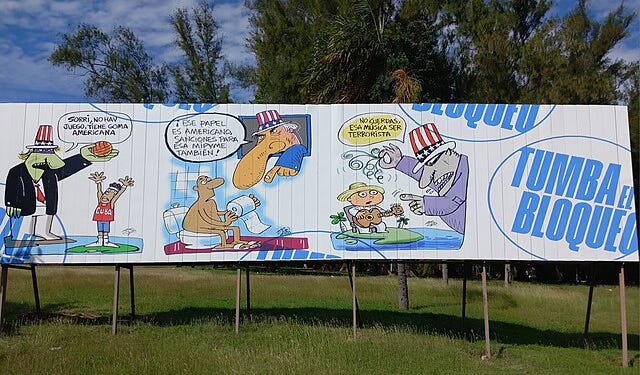
Like so much of foreign policy, the strategy of sanctions is rooted in simple themes we can recognize from our daily lives.
If we think someone is acting poorly, we want them to feel the consequences of their actions. Maybe they’ll change, right?
But as the Council on Foreign Relations and other sanctions experts like Richard Nephew have pointed out, the thinking behind this economic punishment has itself changed to be more discerning about who should be taught this lesson.
After all, sometimes the pain extends far beyond bad actors. In the 1990s, sanctions from the United Nations and the United States against Saddam Hussein’s regime in Iraq contributed to the collapse of the entire country’s economy, leading to widespread suffering among everyday citizens.
Though sanctions are not physical weapons like bombs or drones, the pain they inflict can be as severe.
In recognition of this, targeted sanctions are more in style in the 21st century. They are sometimes called smart sanctions.
WHO HAS THE POWER TO PUT SANCTIONS IN PLACE?
In the United States, sanctions can come from an act of Congress, but are often handed down from the White House under the authority of the International Emergency Economic Powers Act.
This often takes the form of an executive order from the president outlining a new sanction program that targets a specific threat – from terrorism to Iran’s nuclear program to Russia’s invasion of Ukraine.
With each president comes new sanctions programs, leading to the equivalent of a tasting menu where future presidents – wanting to target an individual or group economically – can pick which program they want to use to make each sanction happen.
For example, we reported earlier this fall about President Trump using a Biden-era executive order to impose sanctions on Colombian President Gustavo Petro for his alleged role in allowing drug trafficking networks to “flourish” — a charge Petro vehemently denies.
Individual sanctions are put into effect by the Department of the Treasury’s Office of Foreign Assets Control. OFAC adds and removes items on its running list of sanctioned people and entities all the time. It’s why Top Deck News exists.
WHY DO I NEED TO KNOW ABOUT SANCTIONS?
Sanctions are incredibly under-covered by American media, almost shockingly so. As a tool of economic punishment, knowing the latest about sanctions – especially by the United States – allows you to see in real time how your government is engaging with foreign foes, and where its priorities are.
When a sanction against a Russian-backed Serbian nationalist comes down, that tells us more about the policy objectives of the Trump administration, for example, than whatever small soundbite the president gave the press in the Oval Office.
This is ground-floor information that provides an unobstructed window into daily foreign policy. It touches upon our values and fears, from drug trafficking to nuclear weapons to unstable political actors.
If nothing else, sanctions are probably the world’s hottest gossip.
Pin this!!
This is brilliant! I love the spicy take on the ordinary grind of government doings.