

What is the ghost fleet of Iran and can America meaningfully stop it?
A fresh round of sanctions seeks to target the companies allowing Iranian oil to flow freely to foreign ports.

When you sanction oil that comes from a certain country, you threaten consequences to all those who touch it.
But the U.S. government can’t seem to meaningfully touch the widespread sale of Iranian petroleum, which enters ports around the world undetected.
This week, the Department of the Treasury slapped new economic sanctions on several organizations, ships, and shell companies thought to be involved in the sale of Iranian oil through the use of a ghost fleet operating in the darkest corners of the globe, out of the reach of government enforcement.
WHAT IS THE GHOST FLEET AND HOW DOES IT OPERATE?
To fund its military and foreign policy operations, Iran runs an oil company called Sepehr Energy Jahan, according to records from the federal government.
The U.S. government—to blunt Sepehr’s profits— has laid stiff and complex sanctions against Iranian petroleum industry – whose sales Washington believes fund terrorism.
The sanctions try to exile every dollar tied to the oil from the American financial system—all in hopes of deterring global buyers.
But the world is big and profiteers are cunning.
The Iranian government has developed a sophisticated system of evading sanctions by obscuring the origin of its oil.
This is done through the use of a ghost fleet — a cadre of older oil tankers carrying the flags of third-party countries like Guyana, Gambia, or Panama. They load oil from Iran and set sail for remote stretches of sea.
When the ships arrive in these areas, they often offload the Iranian oil onto other tankers bound for ports in China. The labels of the oil are often changed– crude from Iran may have a sticker saying it’s coming from Malaysia. Sometimes the ships carry duplicate logs claiming the oil onboard is from a non-sanctioned source. The goal is to create a fugue of deception that outwits American authorities who point and shoot at any oil known to be Iranian. Below is a ship-to-ship rendezvous of members of the ghost fleet. The waters near Malaysia are particularly popular for this maneuver.
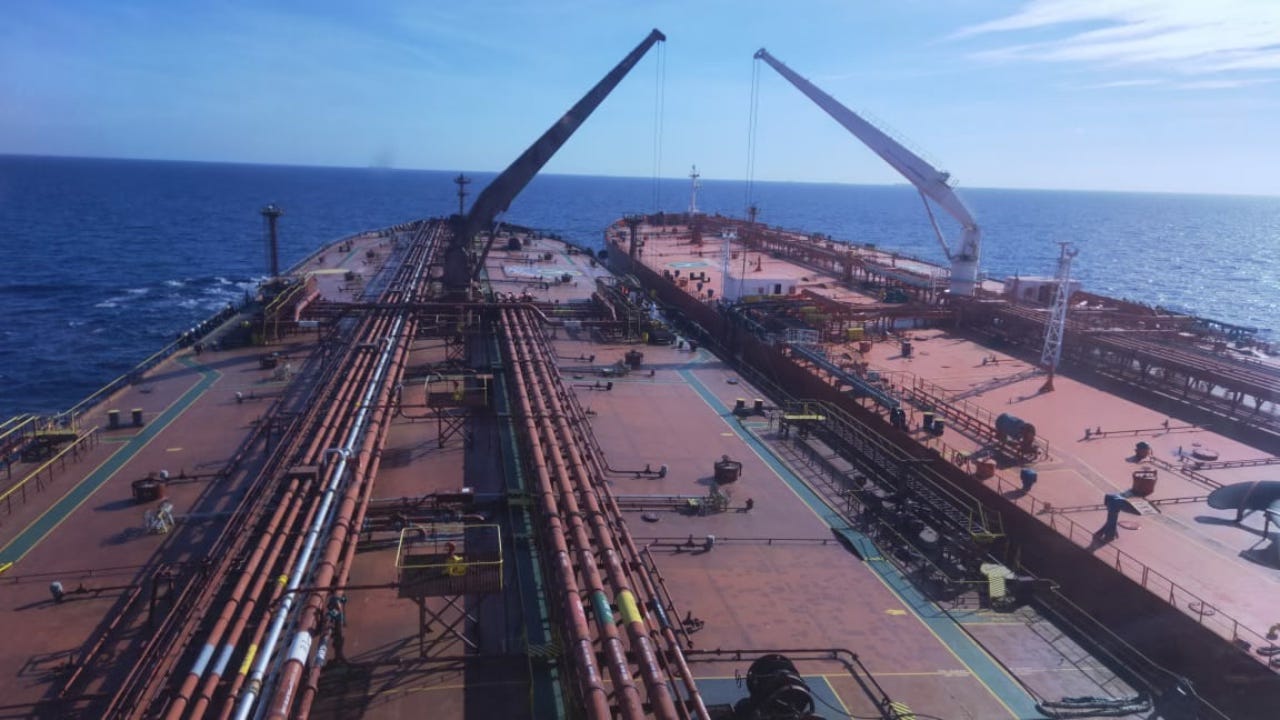
Many times, the ships of the ghost fleet will also turn off their mandatory tracking devices or change their location – a practice known as spoofing.
Beyond this, the ships will change their country of origin and even repaint their hull to evade detection once U.S. authorities catch on, according to reporting from Reuters.
The result is a cat-and-mouse game where the U.S. Department of the Treasury tries to slap sanctions on the companies and ships it believes are carrying Iranian crude, only to have new tankers and companies pop up to continue the illicit work.
According to the organization United Against a Nuclear Iran, the value of Iranian oil transported by the ghost fleet topped $10 billion between June and August of 2025.
The companies hit in the latest round of U.S. sanctions this week include Luan Bird Shipping Service L.L.C and UAE-based Mars Investment L.L.C.
The Trump administration presented this move as an effort to tighten the economic punishment on Iran’s petroleum industry.
“Today’s action continues Treasury’s campaign to cut off funding for the Iranian regime’s development of nuclear weapons and support of terrorist proxies,” Treasury Secretary Scott Bessent said Thursday.
The fact remains, however, that the ghost fleet continues moving Iranian oil en masse to ports around the globe. Finding a way to disrupt that in a meaningful way remains a challenge.